Medical-grade plastics are not defined by appearance, softness, or a supplier’s attractive brochure. Their safety depends on documented chemistry, controlled processing, biological evaluation, and traceable manufacturing. So, what are the regulatory standards for medical-grade plastics? The answer involves several connected frameworks, not one universal approval label.
Dr. David A. Stein, a medical-device materials specialist, explains, “A plastic becomes suitable for healthcare through evidence, not marketing language.” That principle matters when reviewing polypropylene syringes, polycarbonate housings, silicone-like elastomers, or PVC tubing. Manufacturers commonly assess ISO 10993 biological safety, ISO 13485 quality systems, and relevant FDA requirements. European products may also require evidence supporting the EU Medical Device Regulation. USP Class VI testing can provide useful material information, but it does not automatically approve a finished medical device.
Real-world evaluation goes deeper. A resin pellet may pass initial testing, yet molding temperature can change extractables. Cleaning agents may stress the surface. Gamma radiation can affect color, strength, or molecular structure. These details require supplier declarations, formulation controls, sterilization studies, and risk-based testing. It is easy to overstate compliance.
This guide examines the standards behind medical-grade plastics for 2026. It compares regulatory expectations, test methods, documentation, and practical supplier questions. Readers should still verify current requirements with qualified regulatory professionals. Standards evolve. Interpretations differ. Even experienced teams can overlook one small additive or processing step, and that weakness may remain invisible until clinical use.
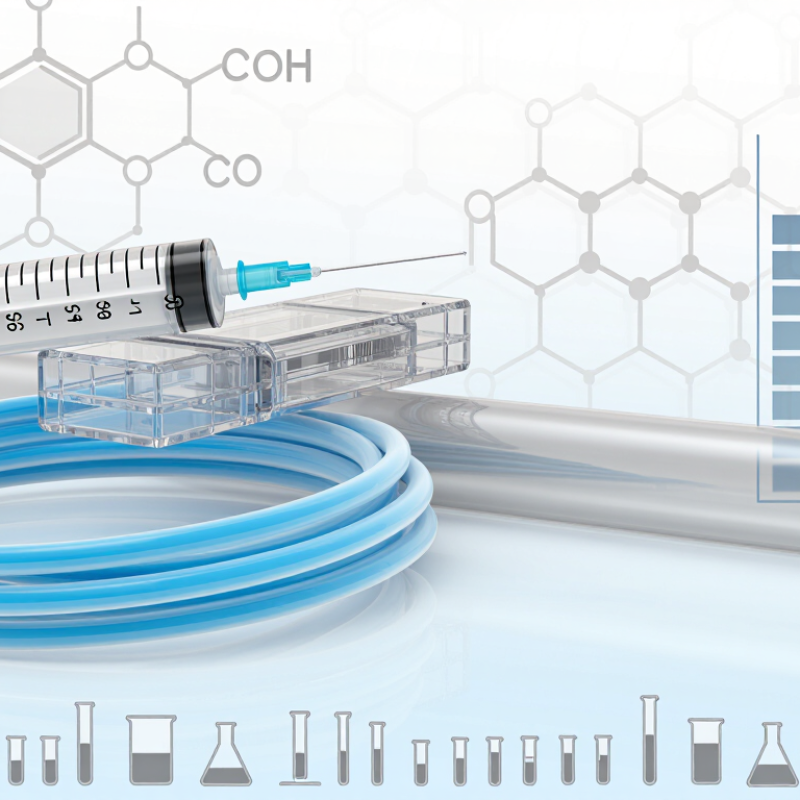
What makes a plastic medical grade? It is not a marketing label. It is a documented fit between material, device, and patient contact. ISO 10993-1:2018 evaluates biological safety through a risk-based process. Contact duration matters. A short-contact syringe and a long-term implant need different evidence. ISO 14971 links hazards to design controls, while ISO 13485 requires a controlled quality system. These standards assess more than resin chemistry.
The WHO Global Atlas of Medical Devices reports more than two million medical device types worldwide. This scale shows why one universal plastic recipe is impossible. A medical polymer needs verified identity, controlled additives, consistent molding, sterilization resistance, and stable performance after aging. Testing may include cytotoxicity, sensitization, irritation, extractables, leachables, and particulate evaluation. FDA guidance also expects chemistry and biocompatibility evidence to match intended use. In practice, traceability can matter as much as tensile strength. A strong sample is not enough. Batch variation remains a practical concern.
Tips: Ask for the exact grade, lot records, sterilization validation, and ISO 10993 rationale. Check whether testing used the finished device, not only raw pellets. Question colorants, processing aids, and regrind. “Medical grade” alone proves little. That wording needs evidence.
Biocompatibility is the central requirement for medical grade plastics. A material must not create unacceptable harm when it contacts the body. ISO 10993 provides a framework for evaluating biological risks. Testing depends on contact type, duration, and affected tissue. A short-contact device needs different evidence than an implant.
Patient safety also depends on processing. Molding temperatures can change chemical residues. Sterilization may weaken polymers or increase extractables. Manufacturers should assess cytotoxicity, sensitization, irritation, and systemic toxicity. Chemical characterization can identify substances that biological tests may miss. A clear material specification should include purity, additives, colorants, and manufacturing controls.
Real-world evaluation requires more than a certificate. Inspectors may review traceability, batch records, and risk-management files. A small surface defect can trap contamination. A transparent component should remain clear after sterilization cycles. These details affect clinical handling. Standards guide decisions, but they do not guarantee safety alone. Testing conditions may not fully represent every patient or hospital process. That limitation deserves honest attention. Engineers should connect laboratory results with actual use, packaging, cleaning, and storage. Patient safety improves when evidence remains current, specific, and carefully questioned.
Medical-grade plastic is not a single category. Its performance must match the application, exposure, and risk profile. A short-term diagnostic housing needs different evidence than an implantable component. Designers should define temperature, pressure, flexing, cleaning, and sterilization cycles before selecting a resin. Biocompatibility assessment commonly follows ISO 10993, while manufacturing quality systems may align with ISO 13485. These standards guide evaluation; they do not automatically approve every finished device.
For fluid-contact parts, low extractables, chemical resistance, and stable dimensions are critical. Tubing may need flexibility without kinking. Syringe components require smooth movement and controlled friction. Surgical instruments need strength, fatigue resistance, and repeated sterilization stability. Transparency can support visual inspection, but clarity may decline after radiation or steam exposure. Small changes matter. A one-degree warpage shift can affect sealing, dosing, or connector fit. Testing should cover the final geometry, not only a molded test plaque.
Long-term implants demand stricter evidence for degradation, wear particles, and tissue response. Packaging and storage conditions also influence performance. Lot traceability, cleanliness controls, and process validation support reliable production. USP Class VI may assist screening, but it cannot replace device-specific biological evaluation. This distinction is often missed. A material can pass laboratory testing yet fail in use because of stress, residues, or poor molding. The honest question is not “Is it medical grade?” It is “Will this material perform safely throughout the intended life cycle?” Some specifications remain incomplete. They deserve review when clinical conditions change.
Representative tensile-strength values for commonly used medical polymers: polypropylene (PP), polyvinyl chloride (PVC), polycarbonate (PC), polyether ether ketone (PEEK), and thermoplastic polyurethane (TPU). Values are approximate midpoints of typical published material ranges and are measured using methods such as ISO 527 or ASTM D638. Actual requirements depend on formulation, sterilization method, device design, and applicable regulations including ISO 10993.
Medical grade plastics are selected for safety, performance, and reliable processing. However, “medical grade” is not one universal certification. A suitable material should meet the device’s intended use, sterilization method, and contact duration. Standards such as ISO 10993 help assess biological safety, while USP Class VI testing may support material evaluation. These tests do not replace complete device validation.
Polypropylene is common in specimen containers, syringes, and laboratory trays. It resists many chemicals and tolerates several sterilization methods. Polyethylene is used for flexible tubing, caps, and fluid containers. Its low moisture absorption helps protect stored liquids.
Polycarbonate offers clarity and impact resistance, making it useful for housings, connectors, and transparent components. Yet repeated steam sterilization can reduce its performance.
Polyvinyl chloride supports tubing and blood-contact applications when properly formulated. Plasticizers require careful review because they may migrate over time.
PEEK serves demanding surgical instruments and implant-related components because it withstands heat, chemicals, and mechanical stress. It is powerful, but expensive and difficult to process.
Thermoplastic polyurethane adds flexibility to catheters and seals.
Real selection work involves more than reading a datasheet. Engineers should examine additives, colorants, extractables, surface finish, and sterilization cycles. A clean-looking part can still fail testing. Small design oversights matter.
Material choice is rarely perfect; it is a controlled compromise between safety, cost, strength, and manufacturability.
Medical-grade plastics are not certified by appearance alone. Manufacturers must validate the material, process, and final device together. The ISO Survey 2023 recorded 38,518 ISO 13485 certificates worldwide, showing how widely quality systems support medical production. Yet certification does not automatically prove every resin is safe for every application.
A robust validation file starts with supplier qualification and lot-level traceability. Engineers review the certificate of analysis, polymer identity, additives, colorants, and contamination controls. They then assess biocompatibility under ISO 10993, including cytotoxicity, sensitization, irritation, and chemical characterization. Extractables and leachables testing becomes critical for tubing, fluid containers, and long-term implants. Sterilization studies must reflect the real dose, temperature, humidity, and exposure time. Process validation normally includes IQ, OQ, and PQ, supported by dimensional checks and mechanical testing. Aging studies should also examine brittleness, discoloration, seal strength, and package integrity. FDA quality-system requirements and ISO 13485 provide structure, but implementation can still vary between facilities. That gap deserves honest attention.
Tips: Request complete lot records, not only a polished certificate. Compare test conditions with the intended clinical use. Challenge suppliers with change-control questions. A resin may pass today, yet a formulation change can alter performance tomorrow. Keep retained samples for investigation. Small omissions often become expensive problems.
| Material Family | Typical Medical Applications | Key Performance Advantages | Common Limitations | Relevant Validation or Test Areas | Typical Sterilization Compatibility | Evidence Manufacturers Commonly Maintain |
|---|---|---|---|---|---|---|
| Polycarbonate (PC) | Transparent housings, fluid-management components, connectors, diagnostic equipment parts | High impact strength, optical clarity, dimensional stability, good heat resistance | May be affected by certain solvents, repeated exposure to alkaline cleaners, and some sterilization conditions | Biocompatibility evaluation, chemical compatibility, impact strength, dimensional stability, aging, extractables and leachables where applicable | Ethylene oxide and selected radiation processes are commonly evaluated; steam compatibility depends on grade, design, and cycle | Material specification, lot traceability, sterilization-aging data, process validation |
| Polypropylene (PP) | Syringe components, specimen containers, laboratoryware, trays, closures, disposable medical devices | Low density, strong chemical resistance, good fatigue resistance, useful heat resistance | Lower stiffness than some engineering plastics; oxidation and embrittlement can occur if processing or sterilization is not controlled | Biological safety, tensile and impact properties, seal performance, particulate control, oxidation stability, dimensional testing | Often suitable for steam and ethylene oxide; radiation resistance varies by formulation and stabilizer package | Resin identity, additives disclosure, sterilization compatibility, batch testing, packaging validation |
| Polyethylene (PE) | Flexible tubing, bottles, liners, containers, packaging components, low-friction parts | Excellent chemical resistance, low moisture absorption, flexibility, good processability | Limited temperature resistance compared with high-performance polymers; stiffness varies significantly by density | Biocompatibility, permeability, tensile properties, seal integrity, environmental stress cracking, cleanliness | Ethylene oxide is widely evaluated; radiation and steam suitability depend on density, grade, and product design | Grade identification, physical-property testing, aging studies, cleanliness controls |
| Polyvinyl Chloride (PVC) | Medical tubing, blood bags, fluid containers, protective components, flexible device parts | Can be formulated across a broad flexibility range, scalable processing, good clarity options, economical | Plasticizers and additives require careful assessment; heat and radiation behavior depend strongly on formulation | Biocompatibility, extractables and leachables, plasticizer characterization, tensile performance, particulate and chemical cleanliness | Ethylene oxide and selected radiation processes may be used; steam exposure requires application-specific assessment | Additive control, chemical characterization, sterilization validation, shelf-life evidence |
| Polyamide (PA) | Catheter components, tubing, structural parts, surgical instrument components | Good strength, abrasion resistance, fatigue performance, and moderate chemical resistance | Absorbs moisture, which can affect dimensions and mechanical properties; processing must control moisture content | Moisture conditioning, tensile and burst testing, dimensional stability, biocompatibility, fatigue testing | Ethylene oxide and radiation may be suitable depending on grade; steam effects must be verified for the specific formulation | Moisture-control records, mechanical validation, sterilization-aging studies |
| Polyoxymethylene (POM) | Precision gears, valves, connectors, actuating mechanisms, low-friction components | High dimensional stability, low friction, good fatigue resistance, precise molding capability | Thermal degradation must be controlled during processing; long-term exposure to strong acids or oxidizers can be unsuitable | Biocompatibility, dimensional accuracy, wear, fatigue, chemical compatibility, thermal aging | Ethylene oxide is commonly assessed; radiation and steam suitability require grade-specific validation | Processing-window qualification, dimensional inspection, mechanical and chemical testing |
| Polyether Ether Ketone (PEEK) | High-performance surgical components, implantable-device components, instrument parts, diagnostic equipment parts | Excellent mechanical strength, high temperature resistance, chemical resistance, and fatigue performance | Higher material and processing cost; machining or molding requires specialized controls | Biocompatibility, chemical characterization, fatigue, wear, thermal aging, implant-specific biological evaluation where applicable | Often compatible with steam, ethylene oxide, and radiation when validated for the finished device | Material certification, process qualification, mechanical testing, sterilization and shelf-life validation |
| Polyetherimide (PEI) | Reusable instrument components, housings, manifolds, electrical and diagnostic equipment parts | High heat resistance, stiffness, dimensional stability, and flame resistance | May be sensitive to stress concentrations and certain chemicals; color and transparency can change after repeated processing | Biocompatibility, thermal cycling, chemical resistance, dimensional stability, repeated-use durability | Steam sterilization and other methods may be suitable after cycle-specific validation | Reusable-device cycle validation, material aging, dimensional and functional testing |
| Fluoropolymers | Low-friction tubing, seals, liners, chemically resistant fluid paths, electrical insulation | Outstanding chemical resistance, low friction, low surface energy, broad temperature capability | Some grades have lower mechanical strength or processing complexity; particulate and processing residues require control | Biocompatibility, extractables and leachables, permeability, tensile performance, particulate and cleanliness testing | Compatibility varies by fluoropolymer; ethylene oxide, radiation, and steam effects must be assessed for the selected grade | Chemical characterization, cleanliness qualification, sterilization compatibility data |
| Thermoplastic Polyurethane (TPU) | Flexible tubing, catheters, seals, wearables, protective medical components | Elasticity, abrasion resistance, tear strength, flexibility, and tunable hardness | Hydrolysis, oxidation, or environmental stress cracking may affect certain formulations and applications | Biocompatibility, hydrolysis and oxidation aging, tensile and tear testing, kink resistance, extractables and leachables | Ethylene oxide is commonly evaluated; radiation and steam suitability depend on chemistry and cycle conditions | Formulation control, aging studies, mechanical testing, sterilization validation |
| Polylactic Acid (PLA) and Other Resorbable Polymers | Resorbable sutures, temporary fixation components, drug-delivery and tissue-engineering applications | Biodegradability or bioresorbability can be tailored through polymer composition and processing | Hydrolysis changes mechanical properties over time; moisture, residual monomer, molecular weight, and crystallinity require control | Biological safety, degradation profile, molecular-weight testing, residual solvent analysis, mechanical retention, sterile barrier performance | Ethylene oxide or other validated methods may be used; sterilization must not change the intended degradation profile | Degradation validation, residuals testing, biological evaluation, sterile packaging evidence |
| Validation or Certification Area | Relevant Standard or Regulatory Framework | What It Generally Addresses | Typical Manufacturer Evidence |
|---|---|---|---|
| Biological Safety | ISO 10993 series | Biological evaluation based on the nature and duration of body contact, including endpoints such as cytotoxicity, sensitization, irritation, systemic toxicity, implantation, and chemical characterization where applicable | Biological evaluation plan, risk-based test reports, chemical characterization, toxicological assessment, and final evaluation report |
| Quality Management | ISO 13485 | Quality management requirements for organizations involved in the design, manufacture, storage, distribution, installation, or servicing of medical devices | Quality manual, documented procedures, design controls, supplier controls, training records, nonconformance records, and audit evidence |
| Risk Management | ISO 14971 | Identification, evaluation, control, and monitoring of risks associated with medical devices throughout the product life cycle | Risk-management plan, hazard analysis, risk-control measures, residual-risk evaluation, and production or post-production monitoring |
| Sterilization Validation | ISO 11135, ISO 11137, ISO 17665, or other applicable sterilization standards | Validation and routine control of ethylene oxide, radiation, moist heat, or other applicable sterilization processes | Installation and operational qualification, performance qualification, biological or dosimetry evidence, routine monitoring, and requalification records |
| Packaging and Shelf Life | ISO 11607 series; ASTM distribution and packaging methods where applicable | Design and validation of sterile barrier systems, packaging integrity, transport durability, and maintenance of sterility through the claimed shelf life | Seal-strength testing, package-integrity testing, accelerated and real-time aging, transport simulation, and visual inspection criteria |
| Process Validation | Applicable quality-system requirements and recognized process-validation practices | Demonstration that molding, extrusion, assembly, cleaning, joining, labeling, and other special processes consistently produce conforming output | Equipment qualification, process parameters, capability studies, operator qualification, sampling plans, and continued process monitoring |
| Material and Chemical Characterization | ISO 10993-18 and risk-based chemical assessment methods | Identification and evaluation of constituents, additives, processing residues, extractables, and leachables that may affect biological safety | Supplier declarations, formulation information, analytical chemistry reports, toxicological risk assessment, and change-control records |
| Pharmacopoeial or Contact Requirements | Applicable pharmacopoeial requirements and jurisdiction-specific regulations | Requirements may apply to plastics used in pharmaceutical packaging, drug-contact systems, containers, closures, or specific medical applications | Material qualification, interaction studies, extractables and leachables assessment, container-closure evidence, and regulatory documentation |
| Traceability and Change Control | ISO 13485 and applicable device regulations | Control of raw materials, supplier changes, formulation changes, manufacturing changes, and records needed to trace product history | Certificate of analysis, lot traceability, approved supplier list, engineering-change assessment, revalidation decision, and complaint records |
Define temperature, pressure, flexing, cleaning, and sterilization conditions first. A short-term housing needs different evidence than an implant. Selection without these details may be incomplete.
Testing should use the finished part, not only a flat test plaque. A small warpage change can affect sealing, dosing, or connector fit. Tiny differences matter.
Low extractables, chemical resistance, and stable dimensions are essential. Tubing may need flexibility without kinking. Containers should resist residues and repeated exposure.
Steam, radiation, heat, or moisture may reduce clarity and increase brittleness. Testing should match the real dose, temperature, humidity, and exposure time. Laboratory conditions may be too gentle.
Evaluation should cover degradation, wear particles, tissue response, and chemical release. Packaging and storage conditions also influence performance. The evidence may still need review when clinical conditions change.
No. A certificate supports material review but does not approve every device. The final design, molding process, sterilization, and biological response still require assessment. Paperwork is not the whole answer.
Request lot traceability, polymer identity, additives, colorants, contamination controls, and test conditions. A polished certificate alone is insufficient. Keep retained samples for later investigation.
Manufacturing checks should confirm installation, operation, and routine production performance. Dimensional checks, mechanical tests, aging studies, and package testing add practical evidence. A formulation change can alter performance tomorrow.
Medical-grade plastics are selected and engineered for use in healthcare environments where safety, reliability, and consistent performance are essential. What makes a plastic medical grade depends on its intended application, controlled formulation, cleanliness, traceability, and ability to meet defined requirements for biological safety. Key evaluation areas include biocompatibility, chemical resistance, sterilization compatibility, mechanical strength, durability, and resistance to aging. What are the regulatory standards for medical-grade plastics? They generally involve recognized frameworks for risk management, material characterization, biological evaluation, manufacturing controls, and quality documentation, although specific requirements vary by product type and market.
Different applications require different plastic properties. Transparent materials may be used for fluid-handling components, while tough, flexible, or heat-resistant plastics can support surgical instruments, diagnostic equipment, implantable parts, and protective housings. Common material categories include thermoplastics, elastomers, and high-performance polymers, each chosen according to function and exposure conditions. Manufacturers validate these materials through testing, process control, sterilization studies, and documented certification to demonstrate consistent quality throughout the product lifecycle.

U-Care Medical