How to Handle Hazardous Materials with Flexible Containment?

Time:2026-11-03 Author:Aria
0%

Hazardous materials rarely arrive in neat, predictable packages. A drum can leak during transfer. Rain can collect inside a temporary work zone, while a failed hose can turn routine handling into a cleanup challenge. Flexible containment—such as compatible liners, portable berms, and temporary enclosures—can create a controlled boundary around liquids, residues, or equipment. But flexible does not mean universal. Material compatibility, permeation, temperature, puncture resistance, and capacity all matter.

How to handle hazardous materials using flexible containment? Start by identifying the substance, its physical state, likely release volume, and exposure routes. The U.S. EPA’s 2021 National Biennial RCRA Hazardous Waste Report documents waste generation and management across reporting facilities, highlighting the variety of waste streams and handling contexts. NIOSH’s Pocket Guide to Chemical Hazards provides substance-specific hazard and exposure information. Use it alongside current safety data sheets and site procedures. Before deployment, check seams, connections, anchoring, drainage controls, and capacity against a credible spill scenario. Inspect before use. Record what you find.

A practical plan also defines who stops a transfer, isolates the area, and arranges appropriate waste management. Practice matters. Gloves may snag, a liner may shift, or a berm may sit on uneven ground. These details are easy to overlook, and they deserve attention. This guide explores selection, setup, inspection, and response planning. No flexible system replaces trained personnel or a site-specific risk assessment.
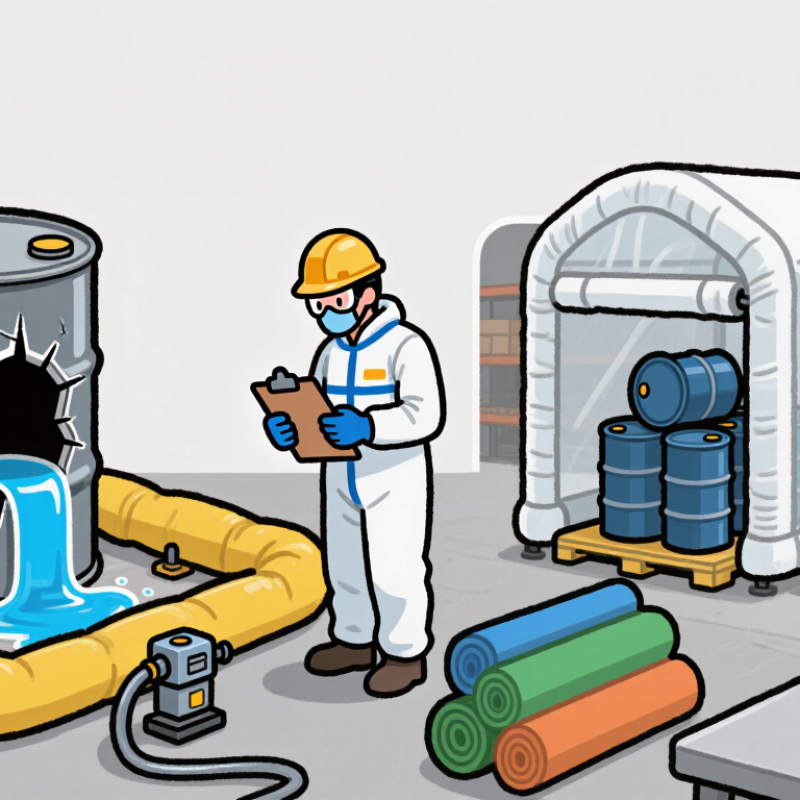
How to Handle Hazardous Materials with Flexible Containment?

Identify the Hazardous Material and Its Risks

Before choosing flexible containment, identify the material as precisely as possible. Read the container label and current safety data sheet, then confirm the product name, concentration, physical state, and temperature. A label is a starting point, not proof. An unlabeled bottle, faded writing, or mixed residue can make identification uncertain. Do not rely on color or smell; some hazards are not obvious.

Assess how the material could cause harm. Check for skin or eye contact, inhalation, fire, corrosion, pressure, and reactions with water or nearby substances. Look for practical clues: a swollen container, crystals around a cap, or liquid collecting beneath a drum. These details matter. If the material or its history is unclear, pause and ask a qualified safety professional rather than guessing. That pause can feel inconvenient, but it is safer than choosing containment on appearance alone.

Tips: Record the material, concentration, and known hazards. Check the flexible barrier’s compatibility with the chemical, seams, closures, and expected temperature. Plan for leaks and safe handling, not just storage. Recheck the assessment if the material changes; an earlier decision may no longer fit.

Select a Compatible Flexible Containment System

Selecting a compatible flexible containment system starts with the exact material being stored. Check its safety data sheet for concentration, temperature limits, and relevant chemical properties. Names can mislead. Confirm that the liner, seams, valves, and gaskets suit the same conditions, not just the main container fabric. Request written compatibility guidance for your operating setup.

Consider how exposure will occur. A brief splash differs from continuous contact, vapor exposure, or a filled system resting under load. Sunlight, freezing temperatures, and repeated cleaning can also affect materials. Compatibility charts are useful, but they are not guarantees; mixtures and aging can change performance. That uncertainty deserves attention.

Size the system for the volume and available floor space, with suitable freeboard and support beneath it. Look closely. A rough surface or sharp edge can damage a liner under weight. Before use, inspect seams and fittings for gaps, cuts, or stiffness. Record checks and follow the site’s spill-response procedure if damage appears. Small leaks matter. A simple inspection routine may feel repetitive, but it can catch wear before it becomes a release.

How to Handle Hazardous Materials with Flexible Containment?

Select a compatible flexible containment system sized for the applicable secondary-containment requirement.

Minimum secondary containment capacity by example inventory (US gallons)

Capacities are calculated using the U.S. EPA container-storage benchmark: at least 10% of the volume of all containers or the volume of the largest container, whichever is greater (40 CFR § 264.175). The inventories shown are examples, not universal requirements. Before choosing a flexible system, confirm chemical compatibility, temperature limits, and construction details with the manufacturer; regulatory requirements vary by application and location.

Prepare the Site, Equipment, and Protective Measures

Before handling hazardous materials, assess the work area and the specific substance involved. Check its safety data sheet for storage, exposure, and cleanup guidance. Clear nearby walkways, mark the work zone, and keep drains protected when appropriate. Choose a stable, level surface away from sharp edges and vehicle traffic. Flexible containment can shift or puncture if the ground is uneven. Small details matter.

Select a flexible berm, liner, or cover rated for the material and expected volume. Confirm chemical compatibility rather than relying on appearance alone. Inspect seams, corners, fittings, and the base for wear, gaps, or trapped debris. Place absorbent supplies and suitable waste containers within reach, but outside the likely spill path. Keep tools clean and dedicate them to the task where practical. A quick inspection helps, though it cannot replace proper training.

Wear protective equipment specified for the substance and task, such as compatible gloves, eye protection, protective clothing, or respiratory protection. Check each item for damage before use, and make sure it fits. Keep an unobstructed exit route and a communication method close by. If the material, equipment, or containment condition is uncertain, pause and consult a qualified safety professional. I have seen preparation drift when work feels routine; that is often when a small gap goes unnoticed.

How to Handle Hazardous Materials with Flexible Containment? - Prepare the Site, Equipment, and Protective Measures

Preparation area Recommended actions Equipment or protective measures Verification before work
Identify the material Review container labels, the safety data sheet (SDS), and the site spill-response plan. Confirm hazards, quantity, and known incompatibilities. Accessible SDS; hazard labels; communication method for the work team. Workers can identify the material and know whom to contact if it is unknown, mislabeled, or unexpected.
Prepare the site Choose a stable location, control access, and keep exits and emergency routes clear. Protect drains and consider nearby waterways, traffic, and weather. Barriers or signs; drain covers where suitable; task-appropriate lighting and communications. The work area is accessible to responders, and the surface and surroundings are suitable for the planned containment setup.
Select flexible containment Choose a berm, liner, or other flexible system rated for the material, temperature, and expected contact time. Do not assume one material is compatible with every chemical. Chemically compatible containment system; product technical information; secondary containment when required by the site plan or applicable rules. Compatibility and required capacity have been checked against the hazard assessment and applicable requirements.
Inspect and position equipment Set up the containment according to its instructions. Check seams, corners, closures, connections, and the ground-contact area for damage or obstruction. Flexible containment; compatible transfer equipment and containers; inspection checklist. No visible tears, holes, or faulty connections; the system is stable and ready for use as specified by its instructions.
Choose protective measures Select PPE from the hazard assessment and SDS, considering splash, contact, inhalation, and other exposure routes. Follow workplace requirements for respirator use. Chemical-resistant gloves and clothing, eye or face protection, and respiratory protection when the assessment requires it. PPE is suitable for the specific material and task, in good condition, and fits the wearer. Required respirator programs and fit testing are in place.
Plan for a release Brief workers on alarms, evacuation routes, isolation boundaries, and notification steps. Only trained and authorized personnel should handle a spill within their capability. Site emergency contacts; suitable spill supplies; eyewash or safety shower where required by the hazard assessment. Workers know when to stop work and evacuate. For an unknown, uncontrolled, or beyond-capability release, isolate the area and contact emergency responders.
Close out the task Inspect the containment after use. Manage recovered material, used absorbents, and disposable PPE according to the waste determination and local requirements. Compatible, labeled waste containers; decontamination supplies; records for inspection and waste handling. Waste is secured and labeled as required, reusable equipment is cleaned or removed from service as appropriate, and the work area is released only when safe.

Always follow the SDS, site procedures, equipment instructions, and applicable regulations. This table is general planning guidance, not a substitute for a task-specific hazard assessment or emergency-response training.

Contain and Handle the Material Safely

How to Handle Hazardous Materials with Flexible Containment?

Contain and Handle the Material Safely

Flexible containment can help control spills and limit contact during transfer, but only when the material and container are compatible. Check the current safety data sheet (SDS), including storage and handling guidance, before choosing a liner, bag, or enclosure. Inspect seams, closures, and connection points for wear. Keep the container stable, clearly identified, and within its rated capacity. A tidy-looking seal can still be the wrong choice. Compatibility matters.

The U.S. Bureau of Labor Statistics reported 2.6 million nonfatal workplace injuries and illnesses in private industry in 2023; this figure is not specific to hazardous-material handling, but it underscores the value of dependable controls. NIOSH’s hierarchy of controls prioritizes engineering measures over relying on worker behavior or personal protective equipment alone. Use flexible containment as one part of a planned process, not as a substitute for training, appropriate PPE, or a spill-response plan. Pause if the material, condition, or fit is uncertain.

Tips: Check the SDS and inspect the container before each use. Avoid overfilling, keep closures accessible, and follow site procedures for transfer and disposal. If a leak appears, stop work and alert trained personnel. Don’t improvise a repair.

Decontaminate Equipment and Manage Containment Waste

Decontaminate equipment before it leaves the containment area, using a method approved for the specific material and equipment. Check the safety data sheet and site procedures; one cleaning method does not fit every residue. Keep clean and used tools separate. Wipe handles, joints, wheels, and other spots where residue can collect. A surface may look clean while a seam still holds contamination. Small details matter.

Tips: Use compatible wipes and cleaning solutions. Work from less contaminated areas toward more contaminated ones, when procedures allow. Wear the required protective equipment, and inspect flexible liners for tears or leaks before moving them. Do not guess.

Treat used wipes, absorbents, rinse liquid, and disposable liners as potentially contaminated until assessed under site procedures. Place waste in compatible, closed containers, and mark contents clearly according to workplace requirements. Keep incompatible waste streams apart. If a liner is damp, damaged, or unexpectedly heavy, pause and ask a trained supervisor how to handle it. That small delay can prevent a messy transfer. Cleaning records also help: note the equipment, method, date, and any residue or damage observed. Perfect documentation is not always easy during busy work, but gaps are worth reviewing.

FAQS

What should I check before using flexible containment?

Review the safety data sheet for storage, exposure, and cleanup guidance. Clear walkways, mark the work zone, and protect nearby drains when appropriate. Choose level ground away from traffic. Small details matter.

How do I choose a suitable liner or berm?

Confirm it is compatible with the material and rated for the expected volume. Appearance alone is not enough. Check seams, corners, fittings, and the base for wear or debris.

What protective equipment should workers wear?

Follow the safety data sheet and site procedures. Use the specified compatible gloves, eye protection, clothing, or respiratory protection. Check for damage and fit before starting.

How can I keep material transfers controlled?

Keep the container stable, clearly identified, and within its rated capacity. Avoid overfilling, and keep closures accessible. Pause if the material or container fit is uncertain.

What should I do if a leak appears?

Stop work and alert trained personnel. Do not improvise a repair. Keep an exit route and communication method available.

How should equipment be decontaminated?

Use a cleaning method approved for the specific material and equipment. Keep used tools separate from clean ones. Check handles, joints, wheels, and seams for residue. Do not guess.

How should used wipes, absorbents, and liners be handled?

Treat them as potentially contaminated until assessed under site procedures. Use compatible, closed containers, mark contents as required, and keep incompatible waste streams apart.

What if a liner is damp, damaged, or unusually heavy?

Pause and ask a trained supervisor how to handle it. Inspect liners for tears or leaks before moving them. Routine work can make me rush; that is worth noticing.

Conclusion

How to handle hazardous materials using flexible containment? Start by identifying the material and assessing its physical, chemical, and exposure risks. Use that information to choose a flexible containment system made from materials compatible with the substance and suitable for the task. Before work begins, prepare a stable, clearly organized site, inspect the containment equipment, and select appropriate protective measures and emergency supplies.

Handle the material carefully, following established procedures and avoiding actions that could cause spills, splashes, or damage to the containment system. Monitor the work area and the system throughout the process, and respond promptly to any sign of leakage or failure. When handling is complete, clean or decontaminate reusable equipment as appropriate, then secure and dispose of used containment materials and collected waste through suitable waste-management procedures. Careful planning and orderly cleanup help reduce exposure and prevent contamination from spreading.

Aria

Aria

Aria is a dedicated marketing professional with a deep passion for innovative strategies and a keen understanding of our company's product offerings. With a wealth of experience in the industry, Aria excels at crafting engaging content that highlights the unique features and benefits of our......