In the ever-evolving world of biopharmaceutical manufacturing, the debate around material choice is critical. Industry expert Dr. Emily Carter, a leading voice in bioprocessing innovations, states, "Switching from stainless steel to single-use technology can revolutionize production efficiency." This highlights the urgency to address the question: Why switch from stainless steel to single-use technology?
Stainless steel equipment has long been the standard in production. However, its maintenance and cleaning requirements can lead to extended downtime. Single-use systems can significantly reduce this idle time. With less cleaning, companies can focus on production. Furthermore, single-use systems enhance flexibility. Facilities can quickly adapt to changing product demands without the need for extensive reconfiguration.
Shifting to single-use technology brings not only efficiency but also potential cost savings. Yet, it comes with challenges, like waste management and initial investment. As the industry contemplates this transition, understanding these pros and cons is essential. The decision may not be clear-cut, but exploring this question opens the door to better solutions.
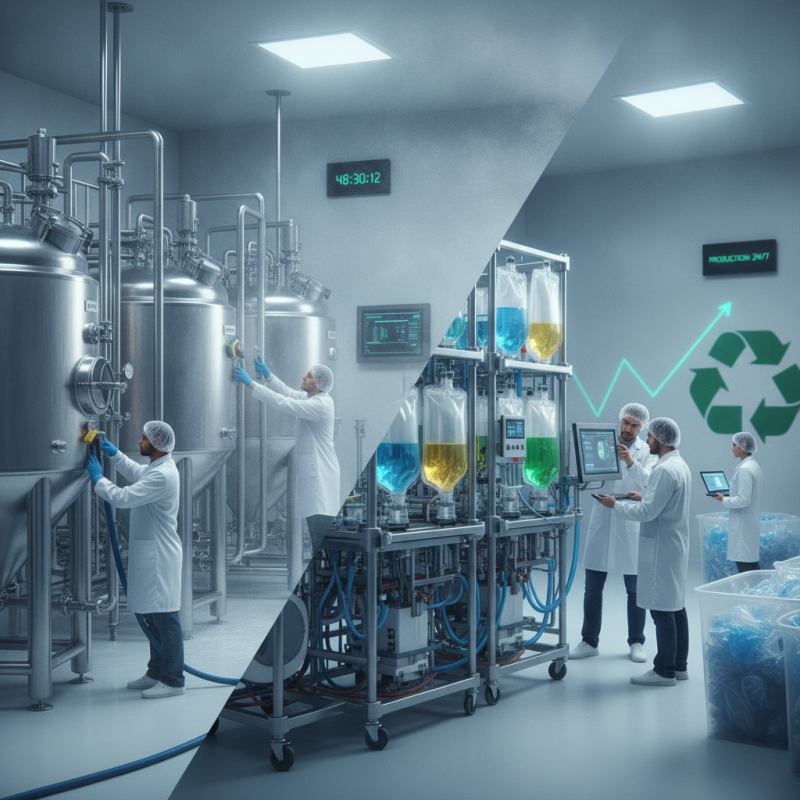
Single Use Technology (SUT) offers significant advantages over stainless steel in various applications. One major benefit is reduced contamination risk. With SUT, each component is used only once. This lowers the chances of cross-contamination in sensitive environments. In contrast, stainless steel requires rigorous cleaning protocols, which can sometimes fail.
Another advantage lies in flexibility. SUT allows for rapid changes in production lines. When a different batch or product is needed, switching components is straightforward. Stainless steel systems, however, can be time-consuming to reconfigure. Additionally, SUT often reduces capital costs. The need for extensive cleaning facilities and labor is minimized.
However, some may question the environmental impact of single-use options. Biodegradable components are increasingly available. Still, the long-term sustainability remains a topic for discussion. Transitioning to SUT can also bring initial challenges in staff training. Employees must adapt to new processes and technologies. A smooth transition involves ongoing education and support.
Cost efficiency is a significant factor when considering the transition from stainless steel to single-use systems in pharmaceutical manufacturing.
Data from the Global Pharmaceutical Manufacturing report indicates that companies can save up to
30% in operational costs by adopting single-use technology. This saving stems from reduced labor costs, as single-use systems require less cleaning and maintenance.
Moreover, the initial investment in single-use technologies is often lower compared to traditional stainless steel installations, which can be substantial.
In addition to lower operational costs, single-use systems offer flexibility in production.
For instance, a study by the BioPharm International suggests that single-use technologies can cut down equipment changeover time by
50%. This efficiency allows manufacturers to respond quickly to market demands and scale operations more effectively without significant capital expenditures.
However, it's worth noting that some companies struggle with the waste management aspect of single-use systems.
The environmental impact remains a concern that cannot be ignored in this cost-saving initiative.
Despite these challenges, the overall trend indicates a shift towards single-use technology in the industry.
As more companies assess the total cost of ownership, including time savings and resource allocation, they may find single-use options more appealing.
Progress in environmentally friendly materials may also address concerns surrounding single-use waste, making this technology an increasingly viable choice.
The transition from stainless steel to single-use technology is gaining traction, primarily due to its effectiveness in reducing contamination risks. Single-use solutions minimize the chances of cross-contamination during processes. Each component is produced in a controlled environment, ensuring sterility from the start. This process greatly enhances safety in sensitive applications.
In many industries, traditional stainless steel systems inherently carry risks. These systems require extensive cleaning and validation after each use. Contamination can occur during these cleaning stages, despite best practices. Switching to single-use technology may seem daunting, but it provides a more reliable path to maintain purity and prevent microbial growth.
Implementing single-use systems also allows for easier identification of potential contamination sources. Each unit is unique, meaning fewer variables to track. While some may question the environmental impact of disposable products, advancements in material science are leading to biodegradable options. Thus, evaluating these technologies is essential for making informed choices that prioritize safety without compromising sustainability.
| Reason | Description | Contamination Risk Reduction |
|---|---|---|
| 1. Elimination of Cleaning Procedures | Single use solutions do not require disinfection or sterilization, reducing time and labor costs. | Minimized risk of cross-contamination from inadequate cleaning. |
| 2. Consistent Quality Control | Each single-use product is manufactured under controlled conditions, ensuring uniformity and reliability. | Reduced variability in contamination from reused materials. |
| 3. Reduced Risk of Damage | Single use tools are not subject to wear and tear that can compromise sterility. | Lower chances of compromised surfaces leading to contamination. |
| 4. Simplified Logistics | Easier inventory management as products come pre-sterilized and ready to use. | Fewer chances of storing contaminated equipment. |
| 5. Enhanced Patient Safety | Single use items can significantly lower the risk of infection in medical and laboratory settings. | Direct reduction in hospital-acquired infections due to contaminated equipment. |
In the modern biopharmaceutical landscape, streamlined operations are vital for success. Single-use technology (SUT) offers significant advantages over traditional stainless steel systems. Data from industry reports indicate that facilities using SUT can reduce operational costs by up to 30%. This efficiency stems from lower cleaning and validation requirements, which often burden stainless steel setups.
Single-use systems not only enhance efficiency but also promote flexibility. A 2021 study found that 65% of professionals credited SUT with faster project turnaround times. The modular nature allows companies to quickly adapt to market demands, accommodating smaller batches without extensive downtime. This adaptability can be a game-changer, especially as products evolve.
However, it's important to recognize the challenges of SUT. Some operations may struggle with the initial investment costs or the sourcing of quality bags and containers. These factors demand thoughtful consideration. Facilities must weigh immediate benefits against potential long-term impacts on sustainability and supply systems. A commitment to ongoing assessment and reflection will ensure that operations remain efficient and effective in the face of changing technologies.
When considering environmental impact, single-use technology shows significant advantages over stainless steel. Single-use products are often made from lightweight materials, leading to reduced transportation emissions. Additionally, production methods for single-use items can sometimes be more energy-efficient compared to stainless steel production.
However, the environmental cost of single-use products cannot be overlooked. Many single-use items end up in landfills. This raises questions about waste management strategies and recycling capabilities. Industries must find a balance between convenience and sustainability.
**Tips:** Encourage recycling of single-use products whenever possible. Research biodegradable options to minimize landfill impact. Factoring in local waste management practices can guide responsible decision-making.
: Single-use solutions effectively reduce contamination risks in sensitive applications. They enhance safety by ensuring sterility.
Each component is produced in a controlled environment, significantly lowering chances of cross-contamination during processes.
Stainless steel systems require extensive cleaning, which can lead to contamination during validation after use.
They can reduce transportation emissions due to lightweight materials, but many end up in landfills.
Industries need to balance convenience and sustainability, focusing on recycling and biodegradable options.
Single-use systems allow for easier tracking of unique units, reducing variables and simplifying identification.
Advancements in material science are leading to more biodegradable options for single-use products.
The environmental impact of waste and the need for effective recycling strategies present ongoing challenges.
Industries must evaluate the reliability and safety improvements before making a transition.
It simplifies procedures but transitions may raise questions about initial costs and environmental responsibility.
In today's rapidly evolving industry landscape, many professionals are asking, "Why switch from stainless steel to single-use technology?" The benefits of single-use technology are compelling, including enhanced cost efficiency due to lower maintenance and operational expenses. Single-use systems also significantly reduce contamination risks, promoting safer processing and ensuring product integrity.
Furthermore, single-use technology streamlines operations by minimizing cleaning and sterilization time, allowing for faster turnaround in production cycles. Environmental impact is also a crucial consideration; while single-use options generate more waste, advancements in biodegradable materials and recycling efforts are addressing these concerns. Ultimately, transitioning to single-use technology can provide significant advantages in efficiency, safety, and adaptability in modern manufacturing processes.

U-Care Medical