In the rapidly evolving field of bioprocessing, understanding the tools at our disposal is essential. The question, "What is the difference between 2D and 3D bio-process bags?" has become increasingly relevant. Dr. Emily Wang, a leading expert in biopharmaceutical manufacturing, remarks, "The choice between 2D and 3D bags can fundamentally affect production efficiency and product quality."
2D bio-process bags have been traditionally used for storage and transport. They are flat and require careful stacking. This can lead to challenges in efficient space usage and potential contamination risks. On the other hand, 3D bio-process bags offer a more robust and versatile solution. They are designed to accommodate a larger volume, minimizing risks associated with product handling.
Understanding the key differences is crucial for companies aiming for optimized workflows. However, challenges remain in selecting the right technology. Some manufacturers may prefer 2D bags due to familiarity, despite the benefits of 3D options. This highlights the need for continuous education and reflection on best practices in bioprocessing. The decision ultimately shapes operational efficiency and product outcomes.
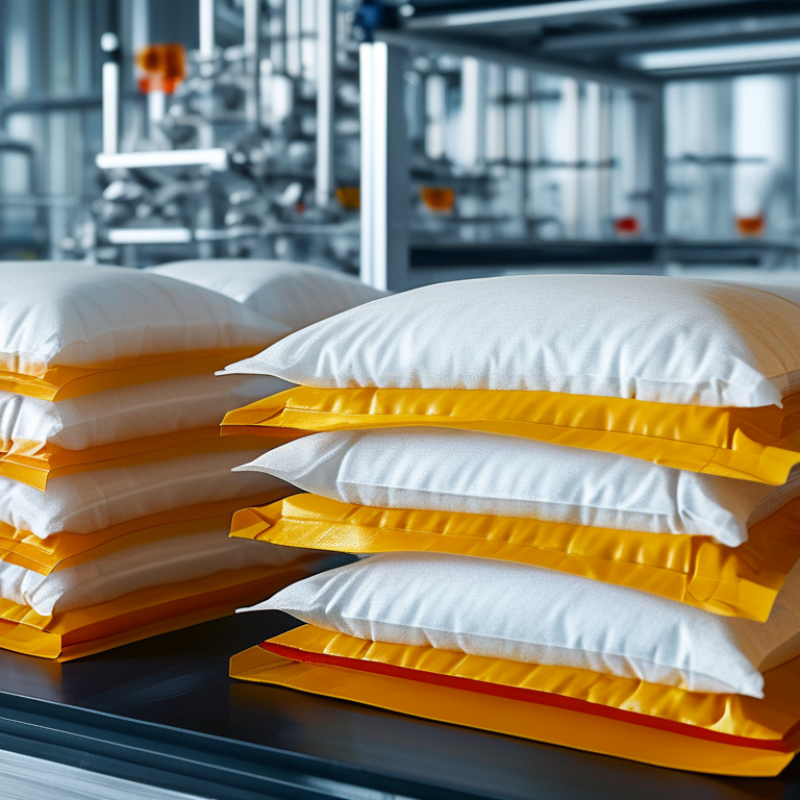
When comparing 2D and 3D bio-process bags, design variations are significant. 2D bags typically feature flat surfaces, which limits their capacity to hold complex structures. In contrast, 3D bags have volume and depth, allowing for more efficient mixing and gas exchange. This three-dimensional design can enhance performance in bioprocessing applications.
One of the surprising differences is material usage. 2D bags often require more frequent changes due to wear. The flat design may lead to stress points. Meanwhile, 3D bags can distribute stress more evenly, potentially offering a longer lifespan. However, this can lead to difficulties in cleaning and validation processes.
Tips: Always consider your process requirements when selecting a bag. Conduct tests to compare performance between 2D and 3D models. While 3D bags may seem superior, they can be complex to handle. Ensure your team is adequately trained for proper usage. Also, keep in mind the cost implications of each type.
| Dimension | 2D Bio-process Bags | 3D Bio-process Bags |
|---|---|---|
| Design Shape | Flat and flexible | Cylindrical and rigid |
| Volume Capacity | Limited to flat configurations | Greater capacity due to 3D design |
| Storage Efficiency | Less efficient due to shape | More space-efficient |
| Manufacturing Cost | Generally lower | Higher due to complexity |
| Compatibility | Compatible with standard equipment | May require specialized equipment |
| Material Utilization | Less material used | More material utilized for structure |
| Durability | Less durable, prone to damage | More durable due to reinforced design |
| Applications | Suitable for low-volume processes | Ideal for large-scale biomanufacturing |
| Filling and Emptying | Easier to fill but harder to drain | More complex filling process |
| Environmental Impact | Higher waste due to shape | Potentially lower waste with optimized designs |
: 2D bags are flat, limiting their capacity. 3D bags have depth, allowing for better mixing and gas exchange.
2D bags often wear out faster due to stress points. 3D bags distribute stress better, potentially lasting longer.
2D bags are made using extrusion blowing. 3D bags use blow molding, allowing for more complex shapes and capacities.
Assess your process requirements. Testing performance is crucial. Staff training is also essential for proper handling.
2D bags are often used in cell culture and protein production. They are easy to monitor and handle.
3D bags are better for larger cultures. They offer improved environments for growth but require careful handling.
3D bags can complicate handling and may cause uneven cell distribution. These issues require attention when used.
About 20% of materials may become scrap. This raises concerns about sustainability in production practices.
No, 2D bags may limit growth potential due to space inefficiency. This is an important factor to consider.
While they have advantages, their complexity can lead to handling difficulties. Reflection on practices is necessary.
In the field of biotechnology, understanding the distinctions between 2D and 3D bio-process bags is essential for optimizing processes. The primary differences lie in their design, which affects their structural integrity and functionality. While 2D bags are flat and simpler in construction, 3D bags offer enhanced volume and better handling of liquids. Material comparisons reveal variances in durability and compatibility, with 3D bags often proving to be more robust under various conditions.
The production techniques for these bags also differ, impacting their manufacturing efficiency and scalability. Each type has specific applications in biotechnology, with 2D bags suited for certain processes and 3D bags excelling in others. A thorough cost analysis highlights the economic factors at play, showing that while initial costs may differ, the long-term benefits can vary significantly. Ultimately, when asking "What is the difference between 2D and 3D bio-process bags?", one must consider these factors to make informed choices that align with specific bioprocessing needs.

 U-Care Medical