Pharmaceutical films are thin, but their performance is not simple. They may protect tablets from moisture, hide unpleasant taste, improve swallowing, or control drug release. The right thickness affects each function. Too thin, and the film may crack, dissolve early, or leave weak coverage. Too thick, and it may delay release, increase tablet size, or create an unpleasant mouthfeel.
This guide examines ten common pharmaceutical film types, including immediate-release, enteric, moisture-barrier, taste-masking, and sustained-release films. It also asks the practical question, “How to select the correct thickness for pharmaceutical films?” The answer depends on polymer chemistry, coating equipment, tablet shape, target dissolution, storage humidity, and patient needs. There is no universal number. A coating that works on a smooth, round tablet may fail around a deep logo or sharp edge.
Pharmaceutics author Michael E. Aulton has often emphasized this patient-centered principle: “The dosage form must be designed around the patient.” That idea matters when selecting thickness. A laboratory film may look perfect under bright inspection lights, yet feel bulky during swallowing. Real manufacturing adds variation. Spray rate changes. Edges receive less coating. Drying can become uneven. These details are easy to underestimate.
Some recommendations in this article are deliberately practical rather than absolute. They should be confirmed through weight-gain studies, thickness checks, mechanical testing, and dissolution testing. Small adjustments can produce large release differences. Careful observation remains essential.
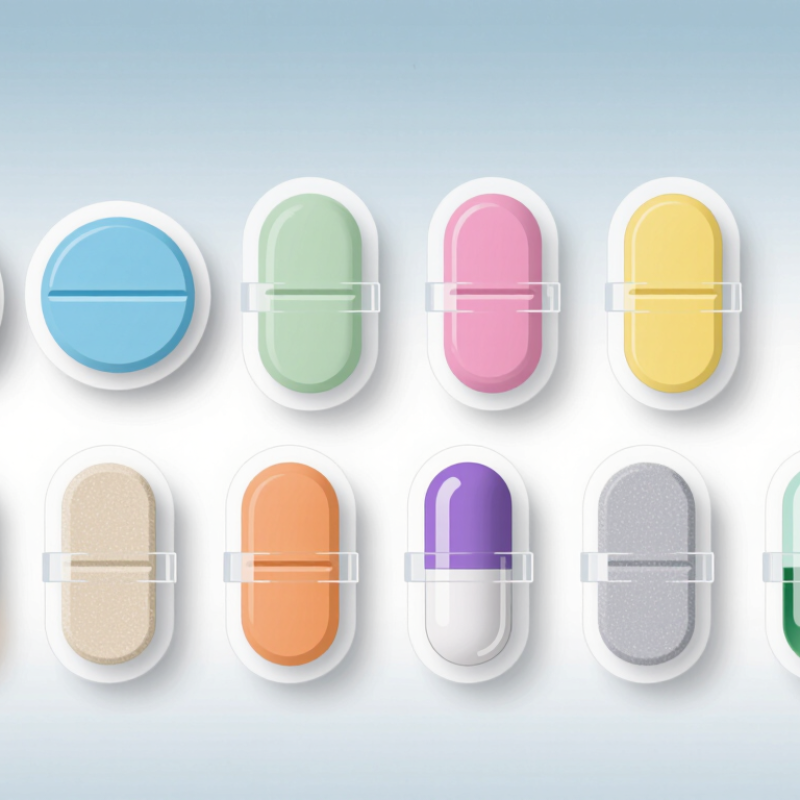
Pharmaceutical films are engineered layers, not decorative covers. They may coat tablets, carry an active ingredient, dissolve in the mouth, or protect products inside packaging. Each use demands a different structure. A typical coating film contains a polymer, plasticizer, pigments, and functional additives. Oral films may also include the drug, sweeteners, and taste-masking agents.
Thickness affects nearly every performance result. A thin film can dissolve quickly, but it may tear during handling. A thicker layer may improve strength and moisture resistance, yet delay drug release or create uneven folding. During development, measure thickness across several points, not only at the center. Small variations can affect weight, appearance, dissolution, and package fit. It is not just a number.
Selection should begin with the product’s risk profile. Moisture-sensitive tablets need stronger vapor protection. Light-sensitive ingredients may require an opaque structure. Flexible oral films need balanced tensile strength, elongation, and rapid hydration. Transdermal systems require controlled diffusion and reliable adhesion. Laboratory testing should include humidity exposure, folding endurance, dissolution, adhesion, and storage stability. Production experience also matters: a film that performs well in a small batch may wrinkle or crack on faster equipment. That gap deserves attention. Thickness should be confirmed through development data, process capability, and regulatory specifications, rather than copied from a previous formulation.
| No. | Film Type | Typical Pharmaceutical Use | Common Thickness Range | Primary Function | Key Performance Requirements | Thickness Selection Guidance | Typical Structure |
|---|---|---|---|---|---|---|---|
| 1 | PVC Film | Base web for blister packs and some strip packs | 200–500 µm | Formable cavity support and product presentation | Formability, dimensional stability, puncture resistance, heat-seal compatibility | Choose a thinner gauge for standard shallow cavities and lower material use; choose a thicker gauge for deeper cavities, larger tablets, or higher mechanical strength. | Monolayer PVC or PVC with a barrier coating |
| 2 | PVC/PVdC Coated Film | Moisture-sensitive tablets and capsules in blister packaging | 200–500 µm | Formability with improved moisture protection | Low water-vapor transmission, cavity forming, seal integrity, chemical compatibility | Use the thinnest PVC base that provides the required cavity strength; increase the PVdC coating level when moisture protection is the controlling requirement. | PVC base with a PVdC barrier coating |
| 3 | Cold-Form Aluminum Laminate | High-barrier blister packs for highly moisture- or light-sensitive products | 110–160 µm | Near-total protection from light, moisture, oxygen, and aroma transfer | Pin-hole control, formability, foil strength, seal-layer adhesion | Thickness is selected according to cavity depth, forming geometry, puncture resistance, and required barrier performance; deeper cavities generally require a more robust laminate. | OPA/Aluminum/Polymer sealant laminate |
| 4 | Aluminum Lidding Foil | Lidding material for tablet and capsule blister packs | 20–30 µm | Blister closure, protection, and push-through or peel opening | Pin-hole resistance, printability, heat-seal strength, controlled opening behavior | Select gauge based on sealing conditions, opening mode, line speed, and the required balance between puncture resistance and push-through force. | Printed lacquer/Aluminum/heat-seal coating |
| 5 | PET Film | Overwraps, labels, laminates, and support layers for pharmaceutical packaging | 12–100 µm | Mechanical support, dimensional stability, and print surface | Tensile strength, stiffness, transparency or opacity, heat resistance, low shrinkage | Use thinner PET for labels and flexible laminates; use thicker PET where stiffness, abrasion resistance, or dimensional stability is critical. | Monolayer PET or PET combined with barrier and sealant layers |
| 6 | PE Film | Sealant layers, sachets, pouches, liners, and flexible pharmaceutical packs | 40–150 µm | Heat sealing, flexibility, and product-contact protection | Seal initiation temperature, seal strength, puncture resistance, chemical compatibility | Choose a thinner film for lightweight sachets and liners; increase thickness for sharp-edged products, higher drop resistance, or demanding seal performance. | Monolayer PE or PE sealant layer in a multilayer laminate |
| 7 | PP Film | Blister components, pouches, lidding structures, and high-clarity packaging | 30–150 µm | Stiffness, clarity, chemical resistance, and heat-seal support | Thermal stability, dimensional control, transparency, seal strength, moisture resistance | Use lower thickness for flexible structures; use higher thickness when stiffness, cavity support, or elevated-temperature processing is required. | Cast or oriented PP, often combined with a sealant layer |
| 8 | EVOH Barrier Film | Oxygen-sensitive products in multilayer pouches, bottles, and sachets | 5–20 µm barrier layer | High oxygen and aroma barrier | Oxygen transmission control, humidity protection from adjacent layers, adhesion, process stability | Do not select EVOH thickness alone; specify the complete multilayer structure because high humidity can reduce EVOH oxygen-barrier performance. | PE/EVOH/PE or PP/EVOH/PP multilayer structure |
| 9 | PVdC Coating Film | High-moisture-barrier blister webs and specialty flexible packaging | 40–120 g/m² coating weight | Moisture, oxygen, and aroma barrier enhancement | Low water-vapor transmission, coating uniformity, adhesion, seal compatibility | Specify coating weight rather than only total film thickness; select the level according to shelf-life targets, product sensitivity, and package geometry. | PVC/PVdC or polymer substrate/PVdC/sealant |
| 10 | Oral Thin-Film Drug-Delivery Film | Fast-dissolving or mucoadhesive films for oral administration | 50–250 µm dry thickness | Accurate dose delivery, rapid wetting, dissolution, and handling | Content uniformity, tensile strength, flexibility, disintegration time, moisture control | Use thinner films for rapid dissolution and comfortable oral handling; increase thickness only when dose loading, mechanical strength, or handling requirements demand it. | Polymer matrix with active ingredient, plasticizer, and functional excipients |
Start with the intended dosage form and use. Oral dissolving films need quick wetting and comfortable mouthfeel. Coating films need smooth coverage and reliable drying. Enteric films need protection from stomach conditions. Do not choose by thickness alone.
Pullulan and gelatin can dissolve quickly in the mouth. Water-soluble polymer blends also support convenient oral delivery. Starch offers a flexible, economical option. The final choice depends on moisture, strength, and storage conditions. Performance can vary.
Thin films may dissolve quickly but tear during handling. Thicker films usually improve strength and barrier protection. They may feel heavier or dissolve more slowly. Thickness can also complicate sealing. Small changes matter.
Measure several areas across the film. Do not measure only the center. Check edges, corners, and areas near seals. Uneven thickness may cause weak spots or inconsistent dissolution. A single reading can mislead.
Test folding, tensile strength, puncture resistance, disintegration, and moisture exposure. For packaging films, also check oxygen, light, and chemical barriers. Inspect seal quality and visible defects. One successful trial is not enough. Test again.
Humidity may soften a film during transport or storage. A dry-room sample can behave differently in a humid warehouse. Test samples under realistic moisture conditions. Include repeated handling and accelerated aging. Climate matters.
Run trials using realistic forming and sealing equipment. Record forming temperature, seal pressure, line speed, and defect rates. A thicker film may resist forming or sealing. A thinner film may puncture or wrinkle. Not always obvious.
Revise it when barrier performance, usability, or process stability is inadequate. Compare results across batches and storage conditions. Review findings with formulation, packaging, quality, and regulatory specialists. Document the reasoning clearly. The first formula may fail.
Pharmaceutical films are engineered materials that protect products, support safe handling, and help maintain stability throughout storage and use. Their structure, barrier performance, flexibility, chemical resistance, and compatibility with the formulation determine how effectively they perform. Common types include moisture-barrier films, oxygen-barrier films, light-protective films, heat-sealable films, coating films, multilayer films, dissolvable films, transdermal films, packaging films, and tamper-evident films, each serving different pharmaceutical applications.
How to select the correct thickness for pharmaceutical films? Start by identifying the product’s protection, processing, and usability requirements. Then evaluate the film’s material properties, expected environmental exposure, sealing or forming process, mechanical demands, and regulatory specifications. Thickness should be selected through a balance of barrier performance, durability, flexibility, production efficiency, and cost rather than by thickness alone. Final decisions should be verified through uniformity testing, seal-strength checks, barrier evaluations, dimensional measurements, and documented quality-control procedures. A well-defined testing plan helps confirm that the chosen thickness consistently meets performance and compliance expectations.

 U-Care Medical