Powder bags often look simple, yet their material can influence safety, product quality, and handling efficiency. During filling, transferring, or emptying, fine powder may rub against the bag surface and generate static electricity. A small spark can create serious hazards in unsuitable environments. It can also attract dust, disrupt weighing, and leave powder clinging to corners.
Why is anti-static properties critical for powder bags? The answer involves more than preventing visible sparks. Anti-static packaging helps control charge buildup and supports safer powder movement. It may reduce surface contamination, improve discharge consistency, and protect operators from unexpected static shocks. In practical use, a grounded filling station, conductive equipment, and properly selected packaging must work together. The bag alone cannot solve every risk.
Material choice matters.
Polypropylene, polyethylene, woven fabric, and laminated structures can behave differently under dry conditions. Humidity, friction speed, powder density, and filling equipment also affect performance. Experienced packaging teams should request test data, confirm resistance ratings, and inspect bag construction before large-scale use. Visual checks still matter. Look for weak seams, damaged liners, or missing grounding features.
However, anti-static performance is not always permanent. Repeated folding, abrasion, contamination, or unsuitable storage may reduce effectiveness. This point is easy to overlook. Reliable decisions should combine supplier documentation, workplace risk assessments, and practical trials with the actual powder and equipment. The following seven tips explain why anti-static properties matter in powder bags and how thoughtful selection can improve safety, cleanliness, and daily handling.
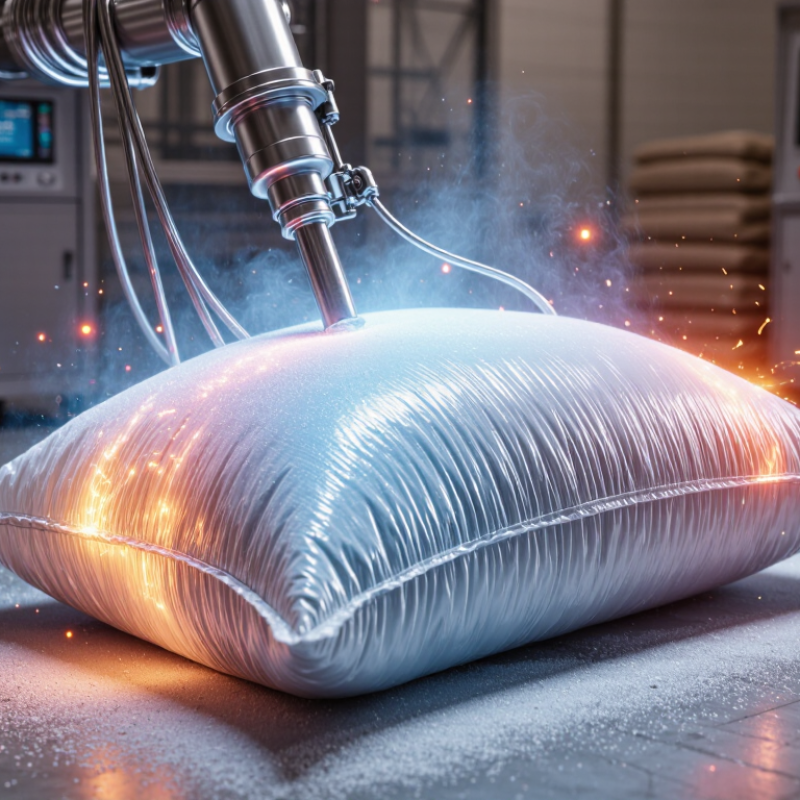
In powder bags, anti-static performance means more than a label on a specification sheet. It describes how the bag limits charge generation, moves charge away, or releases it safely during filling, transport, and discharge. A bag can feel ordinary. Its surface may still collect charge when dry powder slides across it.
During practical handling, static may make fine powder cling to inner walls, resist clean discharge, or attract dust around the opening. It can also create a small shock when an operator touches the bag or nearby equipment. The actual risk depends on powder characteristics, humidity, filling speed, and the surrounding process. Therefore, responsible selection requires test data, controlled procedures, and advice from qualified safety professionals. Surface resistance and charge decay results are useful, but one number cannot describe every working condition.
Anti-static performance is not a magic shield. A properly tested bag may behave differently if the grounding path is poor, the liner is changed, or the bag rubs against dry equipment. That detail is easy to overlook. A practical inspection should check the bag material, seams, closures, grounding points, and handling instructions together. I would also avoid assuming that higher conductivity always means better performance; the correct property depends on the process and powder environment. Sometimes the most useful finding is an uncomfortable one: the bag is acceptable, but the surrounding system is not.
7 Tips Why Anti Static Properties Matter in Powder Bags?
How Static Electricity Builds Up During Powder Handling
Powder handling creates static electricity through friction, separation, and repeated contact. Particles rub against bag walls, hoppers, valves, and conveying lines. Their surfaces exchange electrons and develop uneven electrical charges. Dry air makes charge leakage slower. The effect can become visible when powder clings to the inner film or jumps toward a metal surface. It starts quietly. NFPA 77 recommends controlling static through bonding, grounding, material selection, and charge dissipation. However, an antistatic bag alone cannot remove every ignition risk. Humidity, powder resistivity, filling speed, and equipment design also influence the result.
The U.S. Chemical Safety Board’s Combustible Dust Hazard Study recorded 281 incidents, 119 fatalities, and 718 injuries from 1980 to 2005. The study did not attribute every incident to static electricity, which matters when interpreting the data. Still, it shows why powder containment deserves disciplined controls. A suitable bag should have documented surface resistance, charge-decay performance, and compatibility with the filling system. Conductive paths must remain continuous. Type C flexible bulk containers also require verified grounding before filling and discharge. Operators should inspect seams, liners, and grounding connections before use. That gap matters. In real facilities, rushed changeovers and damaged bag surfaces can undermine otherwise sound procedures. Testing is necessary, but it should reflect actual powder, speed, humidity, and handling conditions.
7 Tips Why Anti Static Properties Matter in Powder Bags?
Why Static Control Reduces Fire and Explosion Risks
Tip 1: Control the spark before it starts. Dry powder sliding through a bag can build static charge quickly. A small spark may ignite airborne dust inside a filling area. Anti-static bags help move this charge safely toward grounded equipment.
Tip 2: Check the complete handling system. The bag, filling nozzle, conveyor, and operator can all carry different electrical potentials. Bonding and grounding should be confirmed before powder transfer begins. A resistance test gives useful evidence, but it cannot replace regular inspection. Look for damage, moisture, and loose connections.
Tip 3: Reduce dust clouds. Static control works best with careful filling speed, sealed connections, and local ventilation. Operators should avoid dropping powder from excessive heights. Fine particles floating near a bag opening create a serious ignition pathway. Keep it calm.
Tip 4: Choose the correct bag construction. Dissipative fabric, conductive components, and suitable liners may perform differently. The material must match the powder, equipment, and working environment. Never assume a bag is safe because it feels different. Labels can be unclear.
Tip 5: Train people on simple actions. Touching grounded equipment, checking clamps, and reporting damaged bags can prevent risky shortcuts. Humidity may reduce static, but it is not a dependable safety control. Conditions change during winter and dry production periods. That detail is often missed.
Static-control packaging helps prevent electrostatic charge accumulation and reduces the chance that a spark will ignite combustible dust. The chart shows representative minimum ignition energy values for common combustible powders; actual values vary with particle size, moisture, concentration, and test method.
Values are representative published ranges used for dust-hazard education, not product specifications. Minimum ignition energy must be confirmed for the specific powder and process.
7 Tips Why Anti-Static Properties Matter in Powder Bags?
Powder handling can create static electricity through rubbing, pouring, and pneumatic transfer. Fine particles may cling to bag walls, filling spouts, gloves, and nearby machine surfaces. A properly designed anti-static bag helps control this charge and reduces sudden discharges near sensitive equipment. In practical packing areas, even a small spark can interrupt production or damage an electronic component. The risk depends on the powder, process, environment, and grounding system.
Tip 1: Check the bag’s surface resistance and test method. “Anti-static” is not a complete technical specification. Tip 2: Use a verified grounding path for bags, filling equipment, and operators. Tip 3: Select a bag structure that limits charge buildup without weakening during lifting. Keep it practical.
Anti-static protection also supports workers by reducing cling, dust movement, and unexpected static shocks. It helps powders flow more consistently during emptying, although it cannot solve poor humidity control or unsuitable equipment design. Tip 4: Control friction at liners, valves, and transfer points. Tip 5: Inspect seams, handles, and closures before use. Tip 6: Store bags away from moisture extremes and damaging heat. Tip 7: Record test results and review them after process changes. A common mistake is trusting a familiar bag for every powder. That assumption deserves another look. Performance should be confirmed under real filling, transport, and discharge conditions, with trained personnel following site procedures.
| Tip | Anti-Static Property | What Can Happen Without Proper Control? | How the Bag Helps | Protection Provided | Recommended Verification | Relevant Reference Framework |
|---|---|---|---|---|---|---|
| 1 |
Controlled surface resistance The bag material is engineered to limit charge accumulation and support controlled charge dissipation. |
Static charge may remain on the bag surface, increasing the possibility of an electrostatic discharge during filling, handling, or emptying. | A suitable dissipative construction helps move charge away in a controlled manner when the bag is properly grounded or bonded. | Protects workers, powder-processing equipment, and nearby flammable atmospheres from uncontrolled electrostatic discharge. | Measure resistance using a suitable test method, with the test conditions, electrodes, humidity, and acceptance limits documented. | ASTM D257 or IEC 61340-2-3 may be relevant for resistance measurements; the selected method must match the bag design and application. |
| 2 |
Reliable grounding and bonding path Conductive or dissipative components provide a defined route for charge removal. |
A charged bag, filling machine, or transfer line can discharge to a nearby person or grounded metal object. | Grounding points, conductive threads, liners, or designated grounding features can help establish electrical continuity when correctly installed and used. | Reduces the likelihood of sparks and unexpected shocks during powder transfer. | Check electrical continuity before use, inspect grounding connections, and verify that the grounding procedure is followed at every transfer point. | NFPA 77 and IEC 60079-32-1 provide recognized guidance on static electricity control; local regulations and the facility risk assessment also apply. |
| 3 |
Low charge generation during filling and emptying The bag structure and handling process are selected to reduce triboelectric charging. |
Friction between powder particles, film layers, liners, hoses, and equipment can generate electrostatic charge. | Anti-static materials and controlled handling practices help reduce charge buildup during movement and discharge of powder. | Supports safer powder transfer and helps reduce interruptions caused by sticking, clinging, or electrostatic attraction. | Review the complete process, including filling speed, drop height, powder flow, liner movement, hose material, and grounding sequence. | Electrostatic control should be evaluated as a process system rather than by testing the bag material alone. |
| 4 |
Compatibility with combustible powders The bag is selected according to the powder's explosibility, minimum ignition energy, moisture sensitivity, and handling conditions. |
A discharge may ignite a combustible dust cloud if an ignition-capable atmosphere and sufficient powder concentration are present. | Appropriate anti-static bag construction, grounding, ventilation, and operating controls help prevent static ignition sources. | Helps protect workers, facilities, and dust-handling equipment from fire or dust-explosion hazards. | Obtain powder safety data, assess dust-cloud and dust-layer hazards, and confirm that the bag category matches the intended use. | NFPA 652, NFPA 654, IEC 60079-32-1, and applicable local explosive-atmosphere requirements may be relevant. |
| 5 |
Controlled electrostatic attraction The material reduces the tendency of powder to cling to the bag wall, liner, or discharge area. |
Fine powder may adhere to surfaces, increasing residue, product loss, cleaning effort, and cross-contamination risk. | A suitable anti-static surface can reduce electrostatic attraction when combined with correct bag geometry and discharge practices. | Helps preserve product recovery, housekeeping efficiency, and process consistency. | Compare residue levels, discharge behavior, cleaning time, and product recovery under controlled operating conditions. | Performance depends on powder properties, humidity, liner design, flow rate, and equipment configuration; no single material rating guarantees performance in every process. |
| 6 |
Static-control performance under environmental conditions The bag is evaluated for the expected temperature, relative humidity, storage period, and mechanical handling conditions. |
Low humidity, aging, abrasion, contamination, or moisture exposure can change electrical behavior and weaken the intended control system. | Material selection, protective packaging, inspection routines, and defined storage conditions help maintain consistent performance. | Protects against unexpected loss of static-control capability during storage, transportation, and repeated handling. | Record environmental conditions, inspect for tears or surface contamination, and retest or quarantine bags that are damaged or altered. | Test conditions should reflect actual use; resistance values measured in a laboratory may not represent performance after damage or contamination. |
| 7 |
Correct bag classification and operating procedure The bag type, liner, grounding method, and handling instructions are matched to the application. |
Using an unsuitable bag class or leaving a grounding connection open can defeat the anti-static design. | Clear labeling, operator training, pre-use checks, and documented filling and emptying procedures make the static-control system repeatable. | Protects people, powder quality, equipment, and production continuity through consistent operation. | Maintain a checklist covering bag identification, grounding, equipment bonding, visible damage, closure condition, and operator authorization. | For flexible intermediate bulk containers, IEC 61340-4-4 may provide relevant classification and test guidance. Applicability depends on the container design and use. |
Anti-static performance matters because powder bags can generate charge during filling, sliding, or emptying.
A charged surface may attract dust, cling to equipment, or release a sudden spark near sensitive environments. Testing should reflect real handling, not only a laboratory sample.
Surface resistance testing is a common starting point. It measures how easily charge travels across the bag material, often under controlled humidity and temperature.
Volume resistance testing checks the material through its thickness. These results help identify whether conductive or dissipative layers work consistently.
Charge decay testing measures how quickly a charged bag loses voltage. A shorter decay time usually indicates better charge control. However, the test setup matters greatly.
Triboelectric charging tests simulate rubbing, folding, or contact with filling equipment. They can reveal charge levels that resistance testing misses.
Grounding continuity tests are also useful when the bag includes conductive components, such as threads or liners.
Inspectors should record humidity, conditioning time, test voltage, and sample location. One corner may perform differently from the center.
A single pass is not enough. Material aging, seams, printing, and repeated handling can change results.
In practice, buyers should request test reports linked to the exact bag construction and production batch.
Standards provide structure, but they do not replace careful risk assessment.
Even a well-designed bag needs compatible filling equipment and verified grounding procedures.
Rubbing, pouring, and pneumatic transfer can build charge on powder and bag surfaces. Fine particles may cling to walls, gloves, and filling spouts.
They help move electrical charge toward grounded equipment. This can reduce sudden sparks near airborne dust. They do not remove every hazard.
No. Check surface resistance, test methods, fabric construction, liners, and conductive components. Labels can be unclear.
Confirm the bag, filling nozzle, conveyor, and operator have a verified grounding path. Check clamps and connections before transfer begins.
No. Testing provides useful evidence, but regular inspections remain necessary. Look for torn seams, loose connections, moisture, and damaged handles.
Use controlled filling speeds and sealed connections. Avoid dropping powder from excessive heights. Local ventilation can help control floating particles.
Not reliably. Dry winter conditions may increase charge buildup, while changing humidity can affect performance. Treat humidity as one factor only.
Inspect seams, handles, closures, liners, and grounding points. Report damage instead of taking a shortcut. Small details matter.
Not necessarily. Performance depends on the powder, equipment, environment, and discharge conditions. That assumption deserves another look.
Record test results and review them after process changes. Confirm performance during real filling, transport, and emptying. Practice may reveal gaps.
Anti-static performance in powder bags refers to the ability of the bag material to limit, dissipate, or safely control electrical charges that may develop during filling, conveying, storage, and discharge. Fine powders can create static electricity through friction and separation, especially when moving through equipment or rubbing against packaging surfaces. Why is anti-static properties critical for powder bags? Effective static control helps reduce the chance of sparks, unexpected powder release, and ignition in environments where combustible dust may be present. It also supports safer handling for workers and helps prevent sensitive powders from clinging to bag walls or attracting unwanted particles.
Anti-static bags can protect products, equipment, and operators by improving material flow, reducing dust-related interruptions, and minimizing electrostatic interference with nearby machinery. Their performance should be confirmed through suitable testing, such as surface resistance, volume resistance, charge decay, and grounding-related evaluations. Selecting a bag with verified anti-static properties and using it correctly as part of a broader safety procedure can improve reliability throughout the powder-handling process.

U-Care Medical