Explore our core engineering items optimized for sterile containment, bio-processing, and high-integrity biological fluid storage.
Biopharmaceutical products—encompassing monoclonal antibodies (mAbs), mRNA vaccines, cell and gene therapies (CGT), recombinant proteins, and clinical trial specimens—possess complex, highly sensitive molecular structures. Unlike traditional small-molecule drugs, biological payloads are highly susceptible to physical degradation, shear stress, and thermodynamic instability. Deviations of even a single degree Celsius outside the validated thermal boundaries can trigger protein denaturation, aggregate formation, or loss of immunogenic efficacy, rendering high-value shipments obsolete.
In modern biopharmaceutical distribution, the demand for high-integrity biologics shipping containers has reached unprecedented levels. Industry regulations, including the European Commission's Guidelines on Good Distribution Practice (GDP) of medicinal products for human use and US FDA 21 CFR regulations, mandate rigorous, verifiable temperature validation throughout the entire supply chain. Achieving this level of reliability requires advanced insulated shipping systems capable of mitigating extreme external environmental fluctuations during global air, sea, and land transport.
Engineered for continuous maintenance of -80°C, -20°C, and +2°C to +8°C critical parameters under ISTA 7D/7E profiles.
High-performance containment systems built to withstand mechanical stress, pressure gradients, and prolonged thermal challenges.
Incorporating high-performance Vacuum Insulation Panels (VIPs) combined with aerogel materials to deliver industry-leading thermal resistance (R-value) in a minimized container profile, maximizing payload-to-volume efficiency.
Engineered with organic and inorganic PCMs calibrated to transition points of -20°C, -65°C, or +4°C. These materials provide extended hold times up to 144 hours without relying on continuous external power sources.
Double-walled roto-molded polyethylene or advanced carbon-composite exteriors provide extreme impact absorption, structural protection, and drop resilience matching ASTM D4169 standards for hazardous transit.
Leveraging domestic raw material networks, localized advanced manufacturing, and strategic logistics access in the Yangtze River Delta.
China's medical and pharmaceutical manufacturing sectors have evolved into central nodes of the global bioscience supply chain. By localizing raw material extraction, advanced polymer extrusion, precision tooling, and quality control under integrated regional clusters, Chinese manufacturers achieve unparalleled efficiency and stability.
For global enterprises sourcing biologics shipping containers, China offers three distinct supply chain vectors:
Global pharmaceutical sourcing agents demand ironclad proof of compliance. To operate within high-integrity distribution corridors, biological packaging must undergo strenuous testing against internationally recognized regimes. As a professional exporter, our manufacturing processes map to strict global quality metrics:
| Compliance Protocol | Standard Verified | Target Parameters |
|---|---|---|
| ISTA 7E Profile | Thermal Transit | +2°C to +8°C, -20°C |
| UN 3373 | Pressure Resistance | 95 kPa Hydrostatic Test |
| ISO 9001:2015 | Quality Management | Full Line Raw Material Traceability |
| GDP Compliant | Logistics Execution | Electronic Sensor Integration |
How artificial intelligence, IoT connectivity, and green polymers are reshaping the future of biologics container manufacturing.
Integration of Bluetooth low energy (BLE), cellular IoT, and GPS transponders within the container shell to monitor temperature, humidity, light exposure, and physical shocks continuously.
Developing compostable and high-barrier biopolymers to replace expanded polystyrene (EPS) inserts, minimizing the ecological footprint of single-use clinical distribution.
Applying machine learning algorithms to historical transit profiles to dynamically predict thermal exhaust limits, helping logistics coordinators reroute delayed critical shipments before failure.
Tailoring structural insulation products to match distinct environments and biological payloads.
| Application Scenario | Required Temperature | Ideal Container Technology | Key Performance Drivers |
|---|---|---|---|
| Clinical Trial Phase I-III | +2°C to +8°C | Polyurethane Core with Water-based PCMs | Short-run cost-efficiency, predictable ambient curves, shock mitigation |
| mRNA Active Ingredients | -80°C to -60°C | Vacuum Insulation Panels (VIP) + Dry Ice | Ultra-low subzero stability, tight seal to prevent CO2 outgassing leaks |
| Cell Therapy (CAR-T) Transit | Below -150°C | Cryogenic Dry Vapor Shippers (LN2) | Cryogenic survival, mechanical lockouts, physical tilt prevention |
| Bulk Vaccine Commercial Export | +2°C to +8°C | Active Temperature Controlled Air Cargo Containers | High payload volume capacity, rechargeable batteries, integrated cooling units |
Changzhou U-Care Medical Co., Ltd. was established in 2014 and is located in Changzhou, Jiangsu Province, within the core region of the Yangtze River Delta—one of China’s most dynamic and economically advanced areas. Benefiting from a strategic location and convenient transportation network, the company enjoys strong access to both domestic and international markets.
U-Care Medical has accumulated extensive experience in the manufacturing of medical and pharmaceutical packaging products. The company is dedicated to the research, development, and production of high-quality disposable medical and pharmaceutical packaging materials. With a focus on innovation and reliability, U-Care strives to provide safe, efficient, and customized solutions to meet the evolving needs of healthcare and pharmaceutical industries worldwide.
The company is equipped with modern production facilities and adheres strictly to industry standards and quality management systems. From raw material selection to final product delivery, every step is carefully controlled to ensure product consistency, safety, and compliance with international regulations.
To become a trusted global provider of medical and pharmaceutical packaging solutions by consistently delivering superior quality, innovation, and customer-focused services.
To support the healthcare industry with safe, reliable, and efficient packaging products, contributing to better protection and delivery of medical products worldwide.
Technical clarifications covering dynamic thermal retention, material validation, customization, and deployment safety.
Our high-end biological containers are engineered to retain pre-conditioned temperatures (+2°C to +8°C, -20°C, or -80°C using dry ice) for durations ranging from 72 hours to 144 hours. Actual holding efficiency is subject to the external ambient environment curve, packaging configuration, and choice of insulation (such as Vacuum Insulation Panels vs. Polyurethane).
Yes, our packaging components, when combined with appropriate biological primary vessels, are designed to align with UN3373 Category B packaging specifications. They undergo extreme hydrostatic pressure testing (up to 95 kPa pressure differential) to ensure no structural failures or leakage occur during rapid high-altitude pressure drops.
Our facility at Changzhou U-Care Medical Co., Ltd. adheres strictly to ISO 13485 and ISO 9001 management protocols. Every production run is mapped to raw material lot numbers. Advanced multi-layer co-extrusion films and polymers undergo rigorous testing for extractables, leachables, and migration properties to guarantee high inertness levels.
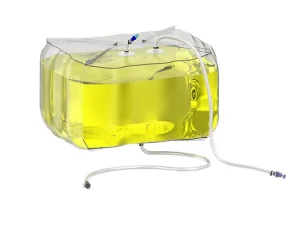
Absolutely. We offer complete custom tooling and structural design services. Our R&D department can develop tailored dimensions, custom single-use bag sizes, port setups, and specialized insulation profiles to align with your facility's automated filling systems.
Passive containers rely purely on chemical phase change materials (PCMs) or dry ice combined with high-performance insulation (VIP/Polyurethane) to maintain temperatures. Active containers utilize electrical compressor systems or heating elements powered by internal batteries. Passive systems are highly reliable and cost-effective as they have no moving parts that could mechanically fail during transport.
Explore our technical portfolio of specialized films, sterilization pouches, and precision extrusion products.
 U-Care Medical